XV Congress of the Argentine Association for Bioinformatics and Computational Biology (A2B2C)
November 11–12, 2026
In person
IFIBYNE, Ciudad Universitaria, Buenos Aires, Argentina
9:00 - 18:00 hs
EXTENSION OF THE ABSTRACT SUBMISSION DEADLINE TO OCTOBER 8th. APPLY!!
About the meeting
The XV Congress of the Argentine Association for Bioinformatics and Computational Biology (A2B2C) provides a framework to foster the exchange of experiences and initiatives among students, professors, researchers, technicians, and professionals involved in activities related to Bioinformatics and Computational Biology.
Date: November 11–12, 2026
Location: IFIBYNE Auditorium, Ciudad Universitaria, Buenos Aires, Argentina
The plenary lectures and presentations will cover various aspects that bring together the branches of bioinformatics and computational biology with the following thematic tracks:
Opening Keynote Talk: Ana Tereza Ribeiro de Vasconcelos (Brazil)From genomes to knowledge: bioinformatics at national scale in Brazil
10:00–10:15
Coffee Break
Session 1: Proteomics and Protein Structure and Function
10:15–10:45
Invited Speaker: Ariela Vergara Jaque (Chile)Computational strategies for designing modulators of ion channel protein–protein interactions
10:45–11:15
Invited Speaker: Miguel Andrade (Germany)Sequence, context, and AI: studying the functional landscapes of intrinsically disordered regions
11:15–12:00
Short Talks selected from abstracts (3)
12:00–12:05
Short Break
12:05–12:50
Round Table 1: Perspectives of Artificial Intelligence in the life sciencesS. Capella Gutierrez, J. Vondrasek
12:50–14:00
Lunch Break
Session 2: Evolutionary, Comparative and Population Genomics
14:00–14:30
Invited Speaker: Pierre Luisi (Argentina)Ancient and present-day genomes in the southern cone: challenges for reconstructing population history
14:30–15:00
Invited Speaker: Juliana Vianna (Chile)From reference genomes to population genomes: evolution and adaptation of South American and Antarctic vertebrates
15:00–15:45
Short Talks selected from abstracts (3)
15:45–16:00
Coffee Break
Session 3: Genomics, Transcriptomics, Epigenetics and Metagenomics
16:00–16:30
Invited Speaker: Rodrigo Nores (Argentina)
16:30–16:45
Invited Speaker: Salvador Capella Gutierrez (Spain)ELIXIR: Ten priority areas for AI in life sciences. How do we move forward?
16:45–17:00
Invited Speaker: Laura Kamenetzky (Argentina)Consolidation of a long-read sequencing genomics center in southern South America
17:00–17:45
Short Talks selected from abstracts (3)
17:45–17:55
Sponsor Talk
17:55–19:30
Poster Session
19:30–20:30
Welcome Cocktail – Art, Science and Technology Event
November 12, 2026
Venue: IFIBYNE (UBA-CONICET)
Time
Activity
Session 4: Biological Databases and Bioimaging
09:00–09:30
Invited Speaker: Henning Hermjakob (UK)The complex portal: from mass spectra to structures
09:30–10:00
Invited Speaker: Cristina Marino (Argentina)Exploring the conformational landscape of the amylome
10:00–10:30
Short Talks selected from abstracts (2)
10:30–10:45
Coffee Break
Session 5: Artificial Intelligence and Systems Biology
10:45–11:15
Invited Speaker: Silvio Tosatto (Italy)The DOME ecosystem: from recommendations to applications in Artificial Intelligence
11:15–11:45
Invited Speaker: Juan Cortés (France)Generative models for the design of disordered proteins
11:45–12:30
Short Talks selected from abstracts (3)
12:30–12:35
Short Break
12:35–13:20
Round Table 2: Leveraging research infrastructures for bioinformatics: the ELIXIR experienceG. Farrel, S. Tosatto, J. Hancock
13:20–14:30
Lunch Break
Session 6: IDPfun2 Consortium
14:30–15:00
Invited Speaker: Gabor Erdos (Hungary)A zero-shot thermodynamic potential for protein mutational stability
15:00–15:30
Invited Speaker: Nathalie Sibille (France)Functional disorder in cell signaling: molecular mechanisms and case studies
15:30–16:15
Short Talks selected from abstracts (3)
16:15–16:30
Coffee Break
16:30–18:00
Poster Session
18:00–18:45
Closing Keynote Talk: Salvador Ventura (Spain)Targeting protein aggregation at the interface of experiment and computation
18:45–19:15
Prizes and Closing Ceremony
19:15–19:30
A2B2C meeting – Election & change of Authorities
Confirmed Speakers
Silvio C. E. Tosatto
Università degli Studi di Padova, Italy
Full Professor in Bioinformatics and Principal Investigator at the BioComputing UP lab of the Department of Biomedical Sciences, Università degli Studi di Padova. His research focuses on bioinformatics and computational biology, particularly on the structural and mechanistic aspects of complex biological systems.
Salvador Ventura
Universitat Autònoma de Barcelona, Spain
Professor of Biochemistry and Molecular Biology at the Universitat Autònoma de Barcelona. His research focuses on protein structure, protein misfolding, conformational diseases, and the development of therapeutic molecules.
Juan Cortes
CNRS, France
Computer scientist specialized in algorithmic robotics and Research Director at CNRS. His interdisciplinary research combines robotics, artificial intelligence, and structural bioinformatics approaches.
Pierre Luisi
CONICET / Universidad Nacional de Córdoba, Argentina
Human Population Geneticist, CONICET Researcher and Full Professor at Universidad Nacional de Córdoba. His research focuses on human population genetics, ancient DNA, population genomics, and the application of bioinformatics and machine learning to evolutionary and biomedical studies.
Miguel A. Andrade-Navarro
Johannes Gutenberg University Mainz, Germany
Professor of Bioinformatics at Johannes Gutenberg University Mainz. His research interests include computational biology, protein and gene function analysis, and data mining approaches in molecular biology.
Henning Hermjakob
EMBL-EBI, United Kingdom
Leader of the Molecular Systems Cluster at EMBL-EBI. His work focuses on systems biology resources, molecular interaction databases, pathways, and biological data standardization.
Cristina Marino-Buslje
Fundación Instituto Leloir / CONICET / ITBA, Argentina
Principal Investigator at CONICET and Head of the Structural Bioinformatics Unit at Fundación Instituto Leloir. Her research focuses on protein structure and evolution, intrinsically disordered proteins, aggregation, and machine learning applications in bioinformatics.
Nathalie Sibille
CNRS / University of Montpellier, France
Research Director at CNRS and Team Leader at the University of Montpellier. Trained in Physics and an expert in NMR spectroscopy for Structural Biology, her research focuses on intrinsically disordered proteins (IDPs), post-translational modifications, and the molecular mechanisms regulating GPCR and arrestin interactions.
Gavin Farrell
ELIXIR
Technical Officer at ELIXIR, supporting the activities of the Data, Interoperability and Compute Platforms. He holds a BSc in Biotechnology and an MSc in Biomedical Genomics, with research experience focused on the gut microbiome and colorectal cancer.
John Hancock
ELIXIR
ELIXIR Communities and Services Coordinator. He promotes collaboration between ELIXIR Nodes and the ELIXIR Hub and leads the development of research communities associated with ELIXIR use cases. He has extensive experience in computational biology, bioinformatics leadership, and research infrastructure management.
Gábor Erdös
ELTE, Hungary
Assistant Professor and Principal Investigator at the Department of Biochemistry at Eötvös Loránd University (ELTE), Hungary, where he leads the Protein Dynamics Research Group. Trained as a bioengineer, he holds a PhD in structural biochemistry and has a decade of experience in bioinformatics. His career spans ten years of academic research alongside specialized experience in the pharmaceutical industry, with professional activity in Argentina and extensive collaborations across Europe, particularly in Italy and Israel. His research expertise centers on the characterization of intrinsically disordered proteins through the integration of biophysical concepts and advanced computational approaches. His work focuses on developing novel predictive methods for both general and functional protein disorder, with the goal of bridging artificial intelligence and biophysics. To this end, he employs a broad range of methodologies that includes machine learning, molecular dynamics simulations, and statistical mechanics to investigate the complex behavior and functional roles of intrinsically disordered proteins. He serves as Co-lead of the ELIXIR IDP Community and as the Hungarian Representative for COST. He is also a core member of the ML4NGP COST action, IDP2Biomed twinning project and a contributor of the IDPFun2 project.
Salvador Capella-Gutierrez
BSC / INB–ELIXIR Spain
Salvador Capella-Gutierrez, PhD, leads the Technologies for Biomedical Research Laboratory at the Barcelona Supercomputing Center (BSC), as well as the Coordination team of the Spanish National Bioinformatics Institute (INB). INB is the Spanish node of ELIXIR, the European research infrastructure for life science data. Salvador joined the BSC in July 2017 from the Spanish National Cancer Research Center (CNIO) in Madrid. A bioinformatician with a solid technological background in both Computer Engineering and Health Sciences, Salvador received his PhD in Bioinformatics in 2012, awarded by the Center for Genomic Regulation and Pompeu Fabra University in Barcelona, Spain.
His current focus is on developing long-term infrastructure to facilitate the scientific benchmarking and technical evaluation of research software in Life Sciences, including tools, web services, and workflows. More recently, he is interested in how to further elevate those efforts to continue serving the research community in the fast-evolving AI context.
Ana Tereza de Vasconcelos
National Laboratory of Scientific Computing, Brazil
Researcher at the National Laboratory of Scientific Computing and former President of AB3C. Her work focuses on genomics, metagenomics, transcriptomics, and computational methods for genomics.
Jiri Vondrasek
Institute of Organic Chemistry and Biochemistry, Czech Academy of Sciences (IOCB Prague); Head of ELIXIR CZ
Head of the Bioinformatics Group at the Institute of Organic Chemistry and Biochemistry of the Czech Academy of Sciences (IOCB Prague) and Head of ELIXIR CZ. His research focuses on structural bioinformatics, computational structural biology, molecular modeling, protein evolution, and biomolecular interactions.
Ariela Vergara
Universidad de Talca, Chile
Researcher at the Center for Bioinformatics, Simulation and Modeling at Universidad de Talca. Her research focuses on computational structural biology of membrane proteins, molecular modeling, docking simulations, and molecular dynamics.
Swiss Institute of Bioinformatics (SIB), ELIXIR Switzerland
Bioinformatics Training Specialist at the Swiss Institute of Bioinformatics (SIB) and member of ELIXIR Switzerland. She develops bioinformatics training programmes and contributes to the ELIXIR-GOBLET Train-the-Trainer initiative.
Luciana Peixoto
BioData.pt | ELIXIR Portugal
Node Coordinator and Training Coordinator of ELIXIR Portugal (BioData.pt). She coordinates national ELIXIR activities and leads training initiatives, contributing to the ELIXIR Training Platform and the Train-the-Trainer programme.
ELIXIR-GOBLET TtT Workshop
Schedule: November 13–14, 9:00–17:00.
Venue: Cero+Infinito.
This course introduces trainers in the life sciences to learning
principles, training techniques, lesson, session, course, and
material design as well as assessment and feedback. It offers
guidance, ideas and tips for designing, developing and delivering
training/teaching activities, all based on research-driven
educational principles. Examples and discussions will also focus
on the challenges presented by academic teaching. This course has
been developed for and by trainers in bioinformatics but is
suitable for all trainers and educators in higher education.
It is part of the
ELIXIR-GOBLET TtT programme.
More information can be found at the following link:
Course description.
Registration Deadline:
25/10/2026 or as soon as all slots are filled.
Registration is on a first-come first-served basis, although
exceptions may be made to ensure diversity and equity.
This course is free of charge for conference attendees who
register to the conference.
Requirements:
You must be registered for the XV A2B2C conference to
participate in this workshop.
Limit: 25 participants.
Notification of acceptance:
October 30th, 2026.
To register for the course, please fill the following form:
Computational Tools for the Prediction of Intrinsic Disorder in Proteins
Schedule: November 13, 9:00–10:30. Venue: Cero+Infinito, FCEN-UBA, Ciudad Universitaria, Buenos Aires.
Trainer: Gábor Erdős (ELTE, Hungary). Places: 40. Free for conference participants.
Requirements: No prerequisites. Computers and internet access will be provided.
This session will introduce the concept of Intrinsically Disordered Proteins (IDPs) and explore how modern bioinformatics and AI-based tools can identify and characterize these regions directly from protein sequences. Through accessible examples and practical applications, participants will learn how computational predictions can help us better understand protein function, regulation, and their roles in health and disease.
Registration deadline: October 25, 2026. Acceptance notification: October 30, 2026.
Molecular Network Resources of the European Bioinformatics Institute
Schedule: November 13, 11:00–12:30. Venue: Cero+Infinito, FCEN-UBA, Ciudad Universitaria, Buenos Aires.
Trainers: Henning Hermjakob and Eliot Ragueneau. Places: 40. Free for conference participants.
Requirements: Basic understanding of protein biology. Computers and internet access will be provided.
This workshop will introduce key systems biology resources developed by the Molecular Networks Team at EMBL-European Bioinformatics Institute, in particular the IntAct database of molecular interactions, the Complex Portal, and the Reactome database of biomolecular pathways. It will provide an in-depth view of their content and use, and their connection to Intrinsically Disordered Proteins.
Registration deadline: October 25, 2026. Acceptance notification: October 30, 2026.
Language Models Applied to Biological Sequence Analysis
Schedule: November 13, 14:00–17:00, and November 14, 9:00–12:00 (6 hours). Venue: Cero+Infinito, Ciudad Universitaria.
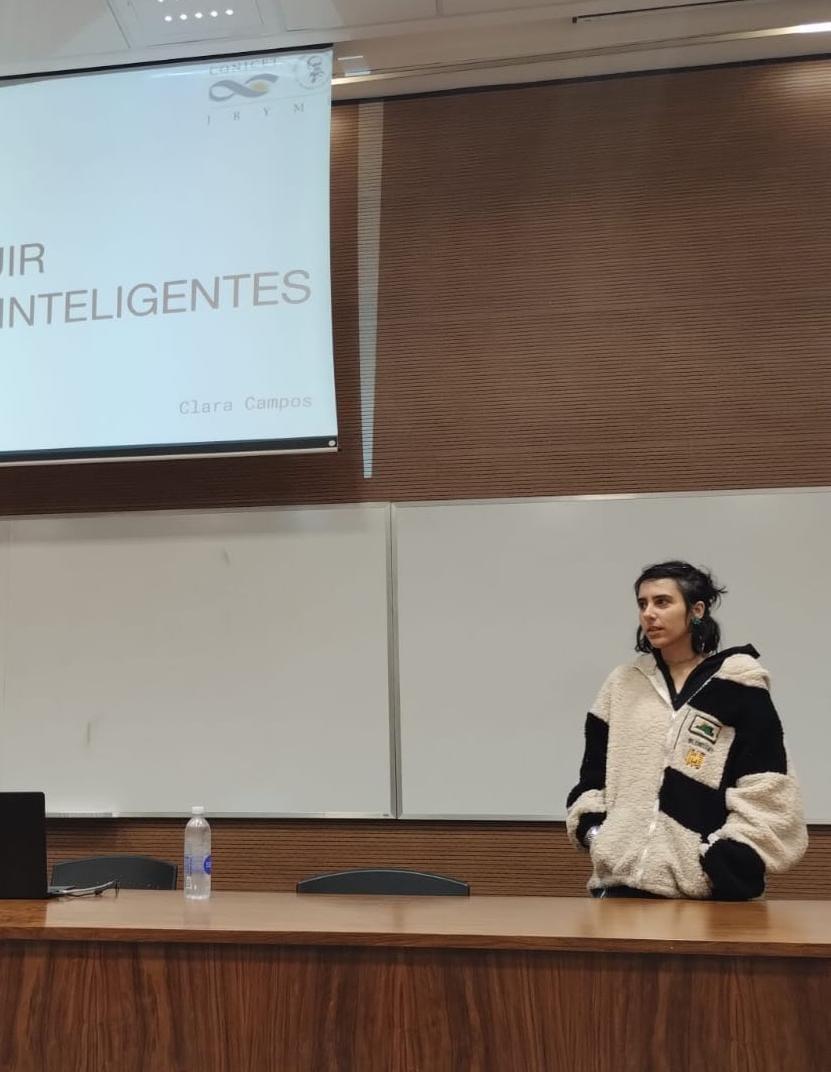
Trainers: Clara Campos and Gabriel Iglesias. Places: 40.
Fee: AR$ 60,000 (general registration) or AR$ 30,000 for conference attendees.
This workshop offers a theoretical and hands-on introduction to the use of language models for biological sequence analysis. We will explore how these models process protein and DNA sequences, identify context-dependent relationships, and generate numerical representations that can be applied to different bioinformatics problems. Through examples and guided exercises, participants will work with sequences, analyze the representations obtained, and interpret their potential applications. Current uses in genomics and proteomics will also be discussed, along with the criteria needed to evaluate results, recognize model limitations, and use these models critically in research contexts.
Registration deadline: October 25, 2026. Acceptance notification: October 30, 2026.
Abstracts must be submitted as a PDF file including title, full list of authors, and their institutional affiliations and abstract text.
The abstract text (excluding title, authors and affiliations) cannot exceed a maximum of 2500 characters (including spaces). Please ensure your abstract clearly outlines the background, methodology, principal results, and conclusions of your work. Do not include figures, tables, reference lists, or complex formatting. All non-standard abbreviations must be defined upon their first use.
The oral presentations will be in English in the format of Lightning Talks:
10 min talk + 2 min questions.
Poster Presentation
Poster dimensions: 90 x 120 cm.
To participate in the poster award competition the presenting author will
have 5 min oral presentation on the date/time of their assigned poster
presentation.
Registration Fees
Category
Early Registration
(Closes Oct 20th)
Late Registration
PhD / Master / Postdoc / Student
$50.000
$75.000
Researchers & International Students (PhD, Master, Postdoc, Student)